
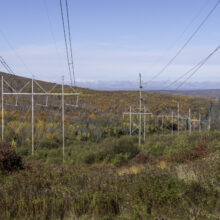
A Governor’s Agenda for Energy Affordability and Utility Accountability in Maine
October 14, 2026 — Maine’s next governor will inherit this affordability challenge and a real opportunity to solve it, through immediate and sustained leadership that addresses the acute and structural drivers of Maine’s skyrocketing rates. The good news is that the tools to address these pressures already exist, largely without waiting on new statutory authority. Maine’s own Public Utilities Commission and Legislature have already shown they are willing to act boldly to curb rate increases and impose accountability on Maine’s investor-owned utilities — from the 2025 dismissal of a major Central Maine Power (CMP) rate request to the 2026 regional transmission organization law. This primer lays out a menu of options for Maine's next governor and transition team to sustain and accelerate that progress, organized around six areas of action.

Monthly Monopoly Digest – September 2026
September 24th, 2026 — September version of Economic Liberties' monthly newsletter that covers the latest with the federal antitrust agencies — the Federal Trade Commission and the Department of Justice's Antitrust Division — and other big developments in competition policy.

Phoenix Case Study: Single-Family Rentals, Build-to-Rent, and Undoing the Corporate Capture of Housing
September 9, 2026 — This case study analyzes the factors that suppressed Phoenix-area home construction, explains why Wall Street chose Phoenix as a testing ground for new housing-backed asset classes, chronicles the rise of single-family rentals and build-to-rent developments in Phoenix, surveys the current market landscape, examines how institutional investors have reduced affordability and worsened conditions for working families, and, finally, offers policy recommendations to ensure that land, credit, and homebuilding create more affordable homes for individual ownership instead of new asset classes for Wall Street investors.
Letter: In the Matter of the Application of Northern States Power Company d/b/a Xcel Energy for Authority to Increase Rates for Electric Service in Minnesota
August 28, 2026 — AELP's letter urges the Minnesota Public Utilities Commission (MN PUC) to reverse its decision letting Xcel raise its authorized return on equity (ROE) from 9.25% to 9.6%.

Break Up Big Medicine: An Agenda to Restore Power Over the U.S. Health Care System to Patients and Practitioners While Saving Families More Than $6,000 a Year
August 27, 2026 — The Break Up Big Medicine agenda offers reforms that would wrest control over our health care system from Big Medicine, whose fiduciary duty is to investors, and restore it to patients and the practitioners who have sworn an oath to care for them.

Minding the Gaps in Surveillance Pricing Reform
August 25, 2026 — This memo aims to build upon a prior analysis, showing the most common problematic carveouts for surveillance pricing legislation. The goal is to help lawmakers and regulators anticipate and avoid such loopholes, which risk neutering a prohibition and allowing surveillance pricing legislation to become a permission slip rather than a restriction on ubiquitous price discrimination. Below are some of the most common loopholes that weaken and derail reform.